Wednesday, June 09, 2010

The Boy in the Striped Pyjamas


Click on the title to watch the trailer of the film.


The Boy in the Striped Pyjamas is a 2006 novel about Germans and the Holocaust, from the point of view of a young boy, written by Irish novelist John Boyne. Unlike the months of planning Boyne devoted to his other books, he said that he wrote the entire first draft of The Boy in the Striped Pyjamas in two and a half days, barely sleeping until he got to the end.
To date, the novel has sold more than 5 million copies around the world, and was published as The Boy in the Striped Pajamas in the United States. In both 2007 and 2008 it was the best selling book of the year in Spain. It has also reached number one on the New York Times bestseller list, as in the UK, Ireland , Australia and many other countries.

Tuesday, June 08, 2010

Margaret Atwood Oryx and Crake


Oryx and Crake is a dystopian science fiction[1] novel by the Canadian author Margaret Atwood. Atwood has at times disputed the novel being science fiction, preferring to label it speculative fiction and "adventure romance" because it does not deal with 'things that have not been invented yet'[2] and goes beyond the realism she associates with the novel form.[3] Oryx and Crake was first published by McClelland and Stewart in 2003and was also shortlisted for the Man Booker Prize for Fiction that same year.

Freedom Writers Diary

Click on the title to learn more about the film and the book.


Straight from the front line of urban America, the inspiring story of one fiercely determined teacher and her remarkable students.


As an idealistic twenty-three-year-old English teacher at Wilson High School in Long beach, California, Erin Gruwell confronted a room of “unteachable, at-risk” students. One day she intercepted a note with an ugly racial caricature, and angrily declared that this was precisely the sort of thing that led to the Holocaust—only to be met by uncomprehending looks. So she and her students, using the treasured books Anne Frank: The Diary of a Young Girl and Zlata’s Diary: A Child’s Life in Sarajevo as their guides, undertook a life-changing, eye-opening, spirit-raising odyssey against intolerance and misunderstanding. They learned to see the parallels in these books to their own lives, recording their thoughts and feelings in diaries and dubbing themselves the “Freedom Writers” in homage to the civil rights activists “The Freedom Riders.”

With funds raised by a “Read-a-thon for Tolerance,” they arranged for Miep Gies, the courageous Dutch woman who sheltered the Frank family, to visit them in California, where she declared that Erin Gruwell’s students were “the real heroes.” Their efforts have paid off spectacularly, both in terms of recognition—appearances on “Prime Time Live” and “All Things Considered,” coverage in People magazine, a meeting with U.S. Secretary of Education Richard Riley—and educationally. All 150 Freedom Writers have graduated from high school and are now attending college.

With powerful entries from the students’ own diaries and a narrative text by Erin Gruwell, The Freedom Writers Diary is an uplifting, unforgettable example of how hard work, courage, and the spirit of determination changed the lives of a teacher and her students.

The authors’ proceeds from this book will be donated to The Tolerance Education Foundation, an organization set up to pay for the Freedom Writers’ college tuition. Erin Gruwell is now a visiting professor at California State University, Long Beach, where some of her students are Freedom Writers.

Tawni O'Dell : back roads

ABOUT TAWNI O'DELL

Tawni O'Dell, a western Pennsylvania native, earned a degree in journalism from Northwestern University. In addition to earning wages as a bank teller and a waitress, she put herself through college working as an exotic dancer jumping out of cakes at bachelor parties. A mother of two, she lives with her husband in Illinois.Back Roads is her first novel.

Book Summary

Harley Altmyer should be in college drinking Rolling Rock and chasing girls. He should be freed from his closed-minded, stricken coal town, with its lack of jobs and no sense of humor. Instead, he's constantly reminded of just how messed up his life is.

With his mother in jail for killing his abusive father, Harley is an orphan with the responsibilities of an adult and the fiery, aggressive libido of a teenager. Just nineteen years old, he's marooned in the Pennsylvania backwoods caring for his three younger sisters, whose feelings about him range from stifling dependence to loathing. And once he develops an obsession with the sexy, melancholic mother of two living down the road, those Victoria's Secret catalogs just won't do the trick anymore. He wants Callie Mercer so badly he fears he will explode. But it's the family secrets, the lies, and the unspoken truths that light the fuse and erupt into a series of staggering surprises, leaving what's left of his family in tatters. Through every ordeal, the unforgettable Harley could never know that his endearing humor, his love for his sisters, and his bumbling heroics would redeem them all.

Funny and heartbreaking, Tawni O'Dell's pitch-perfect characters capture the maddening confusion of adolescence and the prickly nature of family with irony and unerring honesty. Back Roads is a riveting novel by a formidable new talent.

Flowers for Algernon by Daniel Keyes


Flowers for Algernon is the journal of Charlie Gordon, a mentally retarded adult who becomes a genius after undergoing a brain operation. Keyes gives Charlie Gordon a voice that conveys the full range of emotions Charlie experiences before and after the operation. Keyes conveys the drama with such intensity that it becomes almost painful to listen: the yearning of an amiable adult who longs to be as smart as those around him, the pain of the transformed man who must live with the newfound memories of cruel childhood rejection, and finally the horror of his diminishing intellectual capacity. Flowers for Algernon has been popular in all its formats short story, television drama, movie and novel.

P.D. James: The children of men


Click on the title to watch the trailer of the film.

The premise is simple - the entire human population has been rendered infertile. Any scientific attempts to find or fix the cause have failed spectatularly. And so, the world is heading to a very quiet and desperate extinction. The population ages and diminishes as people await the inevitable fading away of humanity. More importantly, hope and meaning have gone. There is no longer a point in doing anything because it will all soon disappear. The result is a world of atrocities and chaos. These have been largely avoided in the UK due to the rational dictatorship of the Warden and his cabinet, who have engineered calm and stability, with many tradeoffs on human rights and freedoms. Enter Otto, the Warden's cousin who is an academic and an unsympathetic snob. He is drawn into the beginnings of an extremely small, almost laughable rebellion, but one that changes Otto and the future of the country forever.

This is an extremely simple novel in its world description. Everything flows naturally from the premise, including all the new neuroses that society is stuck with. The book almost feels sparse. So if you insist on fast-paced thrillers only this is not for you. The reason I loved it was because in its sparseness it gives itself - and the reader - a lot of space to think and consider the issues. Unlike the movie where the government is sadistic and evil, things are much less black-and-white in the novel. There is almost an ambivalence for most of the work as to the question of whether the Warden's methods are wrong. The book is very emotional and almost spiritual -- James is magnificent at giving a sense of longing and nihilism present in a world that has no future. It's worth a read just for that

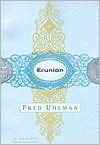
Reunion by Fred Uhlman


A daring novella about the loss of innocence in pre-war Germany.

Reunion is the story of intense and innocent devotion between two young men growing up in "the soft, serene, bluish hills of Swabia," and the sinister (but all too mundane) forces that end both their friendship and their childhood.

The year is 1932. Hans Schwartz is Jewish, the son of a Stuttgart doctor who asserts that the rise of the Nazis is "a temporary illness, something like measles which will pass off as soon as the economic situation improves." The Holocaust would be unthinkable for these characters, but of course it looms over the story: Hans's friend, the young Count Konradin von Hohenfels, has a mother who keeps a portrait of Hitler on her dresser. The two boys share their most private thoughts and trips to the countryside of southwest Germany, discuss poetry and the past and present of their country, and argue the existence of a benevolent God.

The eventual disintegration of this cherished relationship foreshadows the fate of Europe's Jews-- but Uhlman doesn't end his story with neat polarities. Years later, exiled in America, Hans comes upon a revelation about von Hohenfels which provides a stunning denouement and leaves the reader recalling Uhlman's haunting, lyrical descriptions of the vineyards, opera houses, and dark forests of Württemberg.

"Hundreds of bulky tomes have now been written about the age when corpses were melted into soap to keep the master race clean; yet I sincerely believe that this slim volume will find its lasting place on the shelves."--Arthur Koestler, from the Introduction.
About the Author
Fred Uhlman was born in Stuttgart in 1901 and, as an anti-Nazi lawyer, was forced to leave in 1933 for England, where he became a well-known painter.

Rollback by Robert J. Sawyer


The aliens have sent us a message, and we have responded.

Dr. Sarah Halifax decoded the first-ever radio transmission received from aliens. Thirty-eight years later, a second message is received — and Sarah, now 87, may hold the key to deciphering this one, too ... if she lives long enough.

A wealthy industrialist offers to pay for Sarah to have a rollback — a hugely expensive experimental rejuvenation procedure. She accepts on condition that Don, her husband of sixty years, gets a rollback, too. The process works for Don, making him physically twenty-five again. But in a tragic twist, the rollback fails for Sarah, leaving her in her eighties as the second message arrives.

While Don tries to deal with his newfound youth and the suddenly vast age gap between him and his wife, Sarah struggles to do again what she'd done once before: figure out what a signal from the stars contains.

Exploring morals and ethics on both human and cosmic scales, Rollback is the big new SF novel by Hugo and Nebula Award-winner Robert J. Sawyer.

"Robert J. Sawyer is just about the best science fiction writer out there these days." —The Rocky Mountain News

"One of the foremost science fiction writers of our generation." —SF Site

"A writer of boundless confidence and bold scientific extrapolation." —The New York Times

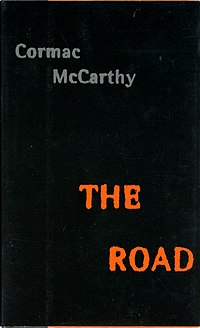
The Road by Cormac Mc Carthy


The Road (click on the title to watch the trailer of the film) is a 2006 novel by American writer Cormac McCarthy. It is a post-apocalyptic tale of a journey taken by a father and his young son over a period of several months, across a landscape blasted by an unnamed cataclysm that destroyed all civilization and, apparently, almost all life on earth. The novel was awarded the 2007 Pulitzer Prize for Fiction and the James Tait Black Memorial Prize for Fiction in 2006.

The Road follows an unnamed father and son journeying together across a grim post-apocalyptic landscape, some years after a great, unexplained cataclysm has destroyed civilization and almost all life on Earth. Realizing that they will not survive another winter in their unspecified original location, the father leads the boy south, through a desolate American landscape along a vacant highway, towards the sea, sustained only by the vague hope of finding warmth and more "good people" like them, and carrying with them only what is on their backs and what will fit into a damaged supermarket cart.

Because of falling ash, the setting is very cold and dark and the land is devoid of living vegetation. There is frequent rain or snow, and electrical storms are common. Nearly all of the few human survivors are cannibalistic tribalists and/or nomads, scavenging the detritus of city and country alike for human flesh, though that too is almost entirely depleted. Their presence is noted by their leavings, mutilated and/or decorated skulls.

Overwhelmed by this desperate and apparently hopeless situation, the boy's mother, pregnant with him at the time of the cataclysm, commits suicide some time before the story begins; the rationality and calmness of her act being her last "great gift" to the man and the boy. The father coughs blood every morning and knows he is dying, yet he struggles to protect his son from the constant threats of attack, exposure, and starvation, as well as from what he sees as the boy's innocently well-meaning, but dangerous desire to help wanderers they meet. Through much of the story, the pistol they carry, meant for protection or suicide if necessary, has only one bullet. The boy has been told to use it on himself if capture is imminent, to spare himself the horror of death at the hands of the cannibals.

In the face of these obstacles, the man and the boy have only each other (they are "each the other's world entire"). The man maintains the pretense, and the boy holds on to the real faith, that there is a core of ethics left somewhere in humanity. They repeatedly assure one another that they are "the good guys," who are "carrying the fire."

On their journey, the duo scrounge for food, encounter roving bands of cannibals, and contend with casual horrors such as a new born infant being roasted on a spit, and people being kept captive as they are slowly harvested for food. Although the vast majority of the book is written in the third person, with references to "the father" and "the son" or to "the man" and "the boy," at one paragraph only in the discussion of the journey the story is told in the first person.

Although the man and the boy eventually reach the sea, neither the climate nor availability of food has improved. Despite having succeeded in defending the boy through extreme hardship, the man has failed to find the salvation he had hoped for his son, and succumbs to his illness and dies; leaving the boy alone, though he is told that he may continue to speak to the father and that the father would still be present. Three days later, however, the grieving boy encounters a man who has been tracking the father and son. This man, who has a wife and two children of his own, brings the boy to join his family. One of the children is a girl. A brief epilogue meditates on nature and infinity in this altered environment.

Friday, June 04, 2010

Khaled Hosseini The Kite Runner.


Click on the title to watch the trailer of the excellent film by Marc Foster (2007)


In his debut novel, The Kite Runner, Khaled Hosseini accomplishes what very few contemporary novelists are able to do. He manages to provide an educational and eye-opening account of a country's political turmoil--in this case, Afghanistan--while also developing characters whose heartbreaking struggles and emotional triumphs resonate with readers long after the last page has been turned over. And he does this on his first try.

The Kite Runner follows the story of Amir, the privileged son of a wealthy businessman in Kabul, and Hassan, the son of Amir's father's servant. As children in the relatively stable Afghanistan of the early 1970s, the boys are inseparable. They spend idyllic days running kites and telling stories of mystical places and powerful warriors until an unspeakable event changes the nature of their relationship forever, and eventually cements their bond in ways neither boy could have ever predicted. Even after Amir and his father flee to America, Amir remains haunted by his cowardly actions and disloyalty. In part, it is these demons and the sometimes impossible quest for forgiveness that bring him back to his war-torn native land after it comes under Taliban rule. ("...I wondered if that was how forgiveness budded, not with the fanfare of epiphany, but with pain gathering its things, packing up, and slipping away unannounced in the middle of the night.")

Some of the plot's turns and twists may be somewhat implausible, but Hosseini has created characters that seem so real that one almost forgets that The Kite Runner is a novel and not a memoir. At a time when Afghanistan has been thrust into the forefront of America's collective consciousness ("people sipping lattes at Starbucks were talking about the battle for Kunduz"), Hosseini offers an honest, sometimes tragic, sometimes funny, but always heartfelt view of a fascinating land. Perhaps the only true flaw in this extraordinary novel is that it ends all too soon

Wednesday, April 18, 2007

Matthew G. Lewis The Monk


The story concerns Ambrosio - a pious, well-respected monk in Spain - and his violent downfall. He is undone by carnal lust for his pupil Matilda, who tempts him to transgress, and, once satisfied by her, is overcome with desire for the innocent Antonia. Using magic spells Matilda aids him in seducing Antonia, whom he later rapes and kills. Matilda is eventually revealed as an instrument of Satan in female form, who has orchestrated Ambrosio's downfall from the start. In the middle of telling this story Lewis frequently makes further digressions, which serve to heighten the Gothic atmosphere of the tale while doing little to move along the main plot. A lengthy story about a "Bleeding Nun" is told, and many incidental verses are introduced. A second romance, between Lorenzo and Antonia, also gives way to a tale of Lorenzo's sister being tortured by hypocritical nuns (as a result of a third romantic plot). Eventually, the story catches back up with Ambrosio, and in several pages of impassioned prose, Ambrosio is delivered into the hands of the Inquisition; he escapes by selling his soul to the devil for his deliverance from the death sentence which awaits him. The story ends with the devil preventing Ambrosio's attempted final repentance, and the sinful monk's prolonged torturous death.

Critique

The Monk is remembered for being one of the more lurid and "transgressive" of the Gothic novels. Featuring demonic pacts, rape, incest, and such props as the Wandering Jew, ruined castles, and the Spanish Inquisition, The Monk serves more or less as a compendium of Gothic taste. Ambrosio, the hypocrite foiled by his own lust, and his sexual misconduct inside the walls of convents and monasteries, is a vividly portrayed villain, as well as an embodiment of much of the traditional English mistrust of Roman Catholicism, with its intrusive confessional, its political and religious authoritarianism, and its cloistered lifestyles. The American fictitious anti-Catholic libel, The Awful Disclosures of Maria Monk, borrowed much from the plot of this novel.

from Wikipedia

Bram Stoker Dracula


The aristocratic vampire that haunts the Transylvanian countryside has captivated readers' imaginations since it was first published in 1897.
A masterpiece that still carries readers beyond their wildest imagination. Written in form of letters (beautiful example of epistolary novel), adapted many times to the cinema.
One of my son's favourite readings!

Tuesday, December 05, 2006

Bebe More Campbell Your Blues Ain't Like Mine

Your Blues Ain't Like Mine

Paperback: 352 pages
Publisher: Ballantine Books (August 10, 1993)
ISBN: 0345383958

Set in the recent American past, this is a timeless tale of racism, murder, and redemption. A black Chicago-born teen goes Deep South for the summer and is murdered for saying the wrong thing to a white woman. Repercussions are felt by everyone involved, both black and white, for generations.

Tuesday, June 14, 2005

William Golding - Lord of the Flies


Born in 1911, Golding was the son of an English schoolmaster, a many-talented man who believed strongly in science and rational thought. Golding often described his father's overwhelming influence on his life. The author graduated from Oxford University in 1935 and spent four years (later described by Golding as having been "wasted") writing, acting,. and producing for a next small London theater. Golding himself became schoolmaster for a year, after marrying Ann Brookfield in 1939 and before entering the British Royal Navy in 1940.
Golding had switched his major from to English literature after two years in college a crucial change that marked the beginning of Golding's disillusion with the rationalism of his father. The single event in Golding's life that most affected his writing of Lord of the Flies, however, was probably his service in World war II. Raised in the sheltered environment of a private English School, Golding was unprepared for the violence unleashed by the war. Joining the Navy, he was injured in an accident involving detonators early in the war, but later was given command of a small rocket-launching craft. Golding was present at the sinking of the Bismarck—the crown ship of the German Navy—and also took part in the D-Day landings in France in June 1944. He later described his experience in the war as one in which “one had one’s nose rubbed m the human condition. After the war Golding returned to teaching English and philosophy at the same school where he had begun his teaching career. During the a nine years, from 1945 until 1954, he wrote three novels rejected for their derivative nature before finally getting the idea for Lord of the Flies after reading a bedtime boys adventure story to his small children. Golding wondered out loud to his wife whether it would be a good idea to write such a story but to let the characters "behave as they really would." His wife thought that would be a "first class idea." With that encouragement, Golding found that writing the story, the ideas for which had been germinating in his mind for some time, was simply a matter of getting it down on paper.
Lord of the Flies
William Golding's classic tale about a group of English schoolboys who are plane-wrecked on a deserted island is just as chilling and relevant today as when it was first published in 1954. At first, the stranded boys cooperate, attempting to gather food, make shelters, and maintain signal fires. Overseeing their efforts are Ralph, "the boy with fair hair," and Piggy, Ralph's chubby, wisdom-dispensing sidekick whose thick spectacles come in handy for lighting fires. Although Ralph tries to impose order and delegate responsibility, there are many in their number who would rather swim, play, or hunt the island's wild pig population. Soon Ralph's rules are being ignored or challenged outright. His fiercest antagonist is Jack, the redheaded leader of the pig hunters, who manages to lure away many of the boys to join his band of painted savages. The situation deteriorates as the trappings of civilization continue to fall away, until Ralph discovers that instead of being hunters, he and Piggy have become the hunted: "He forgot his words, his hunger and thirst, and became fear; hopeless fear on flying feet." Golding's gripping novel explores the boundary between human reason and animal instinct, all on the brutal playing field of adolescent competition

Larry Watson - Montana 1948 - 185p


Larry Watson was born in 1947 in Rugby, North Dakota. He grew up in Bismarck, North Dakota, and was educated in its public schools. He received his BA and MA from the University of North Dakota, his Ph.D. from the creative writing program at the University of Utah, and an honorary Doctor of Letters degree from Ripon College. Watson has received grants and fellowships from the National Endowment for the Arts (1987, 2004) and the Wisconsin Arts Board.
Montana 1948
A young Sioux woman tossing with fever on a cot; a father begging his wife for help; a mother standing uncertainly in her kitchen with a 12-gauge shotgun: from these fragments of memory, evoked by the narrator as the novel opens, Watson builds a simple but powerful tale. It is Montana in 1948, and young David Hayden's father, Wesley, is sheriff of their small town--a position he inherited from his domineering father. Wesley is overshadowed by his older brother, Frank, a war hero who is now the town doctor. When Marie, the Sioux woman who works for the Haydens, fall ill, she adamantly resists being examined by Frank. Some probing reveals that Frank has been molesting the Indian women in his care. Wesley's dilemma--should he turn in his own brother?--is intensified when Marie is found dead and David confesses that he saw his uncle near the house before she died. The moral issues, and the consequences of following one's conscience, are made painfully evident here. Watson is to be congratulated for the honesty of his writing and the purity of his prose. Highly recommended.

Thursday, June 02, 2005

Arundhati Roy - The God of Small Things


Arundhati Roy was born in 1961 in Bengal, India, and grew up in Kerala. She got her degree in architecture from the Delhi School of Architecture, but became a screenwriter instead, writing scripts for movies and television in India. She lives in Delhi with her husband, film-maker Pradeep Kishen.

Her first novel, The God of Small Things (1997), won the prestigious Booker Prize and became an international best-seller. The book, which took Roy five years to write, is not strictly autobiographical, but she says “the sadness of the book” * has stayed with her, and that she may never write another novel.
The God of Small Thing
With sensuous prose, a dreamlike style infused with breathtakingly beautiful images and keen insight into human nature, Roy's debut novel charts fresh territory in the genre of magical, prismatic literature. Set in Kerala, India, during the late 1960s when Communism rattled the age-old caste system, the story begins with the funeral of young Sophie Mol, the cousin of the novel's protagonists, Rahel and her fraternal twin brother, Estha. In a circuitous and suspenseful narrative, Roy reveals the family tensions that led to the twins' behavior on the fateful night that Sophie drowned. Beneath the drama of a family tragedy lies a background of local politics, social taboos and the tide of history?all of which come together in a slip of fate, after which a family is irreparably shattered. Roy captures the children's candid observations but clouded understanding of adults' complex emotional lives. Rahel notices that "at times like these, only the Small Things are ever said. The Big Things lurk unsaid inside." Plangent with a sad wisdom, the children's view is never oversimplified, and the adult characters reveal their frailties?and in one case, a repulsively evil power?in subtle and complex ways. While Roy's powers of description are formidable, she sometimes succumbs to overwriting, forcing every minute detail to symbolize something bigger, and the pace of the story slows. But these lapses are few, and her powers coalesce magnificently in the book's second half. Roy's clarity of vision is remarkable, her voice original, her story beautifully constructed and masterfully told.

Wednesday, June 01, 2005

André Brink - A Dry White Season 320p. -The Other Side of Silence320p. - An Instant in the Wind 250p.


Andre Brink was a South African writer whose novels were often criticized by the South African government. Brink was educated in South Africa and France. He later became a professor of Afrikaans and Dutch literature at Rhodes University in Grahamstown, South Africa. In essence, this meant depicting sexual and moral matters and examining the political system in a way that rapidly antagonized the traditional Afrikaner reader. His novels presented increasingly bleak and bitter evidence of the disintegration of human values that occurs under apartheid. A Dry White Season, 1969, a white liberal investigates the death of a black activist in police custody. A Chain of Voices, 1982, recounts through many points of view a slave revolt in 1825. Brink's works were well received abroad, but two were banned from South Africa. Those books were Looking on Darkness and A Dry White Season. he determined to involve himself in the opposition to apartheid, and his books have explored both the temptations of exile and the compulsion to return to South Africa and oppose the racist government. His novel Kennis von dle Aand (Looking on Darkness) was banned in 1974 and he responded by beginning to write in English as well as Afrikaans.
A Dry White Season
A heart gripping, eye watering, investigation about two innocent victims tortured and put to death by political powers. This detective story raises many important issues about political abuse and political lies that have been recently common in the United States of America, "the land of the free." One of the most significant issues in the story is about enforcing laws that hurt not only the ones being tortured and killed but also the entire society who becomes captive of its government through fear. This is a very strong and powerful story, complete with excitement, suspense, drama, comedy and love; making it a great combination to facilitate the introduction of important issues and at the same time keep the reader intrigued while using humor and love to lighten-up the tension of the reader.
The Other Side of Silence
Hanna X is a young German woman who, after years of abuse in a Bremen orphanage, escapes to her country's colonies in southwest Africa, only to be even more badly brutalized--mutilated, even--by the men she has volunteered to serve. Disfigured and mute, she is banished to Frauenstein, a desert asylum for broken, unwanted women. When Hanna saves frail young Katja from the violent advances of a drunken soldier by beating him to death, her silent rage comes alive and the tenor of Brink's story shifts from suffering to revenge. Forming a militia from the scarred victims of colonial oppression, natives and immigrant women alike, Hanna declares war on the Reich itself, organizing attacks on German desert outposts and ultimately coming face-to-scarred-face with the persistent shadows of her childhood--as well as the man responsible for her horrible disfigurement. This is familiar territory for Brink, a South African whose explorations of violence, memory, and apartheid have won him praise and media attention. His latest proves provocative by evoking these themes within the unconventional setting of German colonialism.
An Instant in the Wind

In Brink's hands, in 1750, a naive but spirited white woman from the Cape accompanies her Swedish explorer husband into the upmapped interior, only to find herself alone when the husband dies and the Hottentot retainers head for the hills.

She is found by a runaway slave, Adam, who for reasons of his own agrees to set off with her to the Cape.

Brink vividly describes the country through which they must travel. Against its physical presence, the couple become lovers. All of this is good fun. Brink was writing at a time when black/white relationships were forbidden under apartheid law. Indeed, the book for a while was banned. He delivers us a vintage love story, full of sex and spirit. (Funny how Coetzee, 25 years later when inter-racial sex is no longer verboten, sees the politics of such relationships in an entirely different way).

Laird Konig - The Little Girl Who Lives Down the Lane


"This has to be one of the most exciting books ever! I had discovered this book when I was 15 yers old and did a book report on it. I was so gratful they made a movie out of it, though I have to say the book is much better than the movie. "The little Girl Who Lives Down The Lane" is suspensful, scary, and yet compassionate. Take it from me, this is a great book. I hated to read and I havn't stopped talking about this book! I am now 41 years old and just now finding this book to read it again. Every teenager will love it." a reader
Personally, I thought the film was as amazing as the novel and Jodie Foster is excellent (she was 13 then!). Teacher.

Dee Brown - Bury my Heart at Wonded Knee


Dee Brown's Bury My Heart at Wounded Knee was first published in the United States in 1970. This landmark book ”which incorporated a number of eyewitness accounts and official records” offered a scathing indictment of the U.S. politicians, soldiers, and citizens who colonized the American West. Focusing mainly on the thirty-year span from 1860 to 1890, the book was the first account of the time period told from the Native-American point of view. It demonstrated that whites instigated the great majority of the conflicts between Native Americans and themselves. Brown began searching for the facts about Native Americans after he met several as a child and had a hard time believing the myths about their savagery that were popular among white people. Brown published his book a century after the events took place, but it was a timely publication, since many U.S. citizens were already feeling guilty about their country's involvement in the Vietnam War. Brown's book depicted, in detail, the U.S. government's attempt to acquire Native Americans' land by using a mix of threats, deception, and murder. In addition, the book showed the attempts to crush Native-American beliefs and practices. These acts were justified by the theory of Manifest Destiny, which stated that European descendents acting for the U.S. government had a God-given right to take land from the Native Americans

Thursday, May 26, 2005

Alice Walker - The Color Purple


Recognized as one of the leading voices among black American women writers, Alice Walker has produced an acclaimed and varied body of work, including poetry, novels, short stories, essays, and criticism. Her writings portray the struggle of black people throughout history, and are praised for their insightful and riveting portraits of black life, in particular the experiences of black women in a sexist and racist society. Her most famous work, the award-winning and best-selling novel The Color Purple, chronicles the life of a poor and abused southern black woman who eventually triumphs over oppression through affirming female relationships. Walker has described herself as a "womanist" — her term for a black feminist —
The Color Purple
Celie is a poor black woman whose letters tell the story of 20 years of her life, beginning at age 14 when she is being abused and raped by her father and attempting to protect her sister from the same fate, and continuing over the course of her marriage to "Mister," a brutal man who terrorizes her. Celie eventually learns that her abusive husband has been keeping her sister's letters from her and the rage she feels, combined with an example of love and independence provided by her close friend Shug, pushes her finally toward an awakening of her creative and loving self.